

A Servo Hydraulic Actuator is a hydraulic device used to produce
controlled linear force and movement. When combined with suitable
sensors, a servo valve and a closed-loop controller, it can be
used for controlled loading in material, fatigue and structural
testing systems.
Servo Hydraulic Actuators
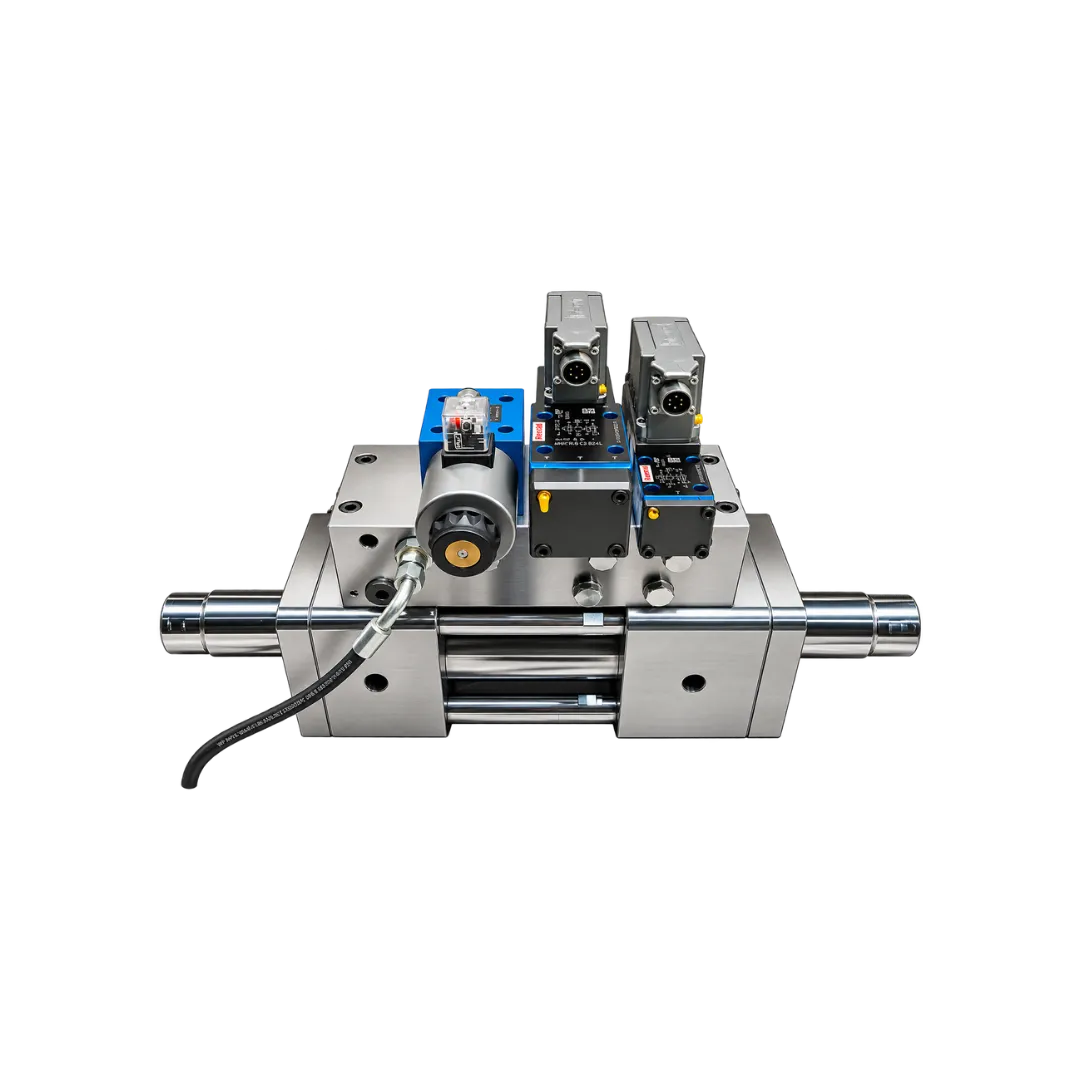
SERVO HYDRAULIC ACTUATORS
Servo Hydraulic Actuators
Structural & Dynamic Testing Systems
Servo Hydraulic Actuators are precision-engineered devices designed to deliver controlled linear force and motion using hydraulic power and servo control technology. They are used in material testing, structural testing, fatigue testing and dynamic load simulation applications where accurate, repeatable force or displacement control is required. Configurations can be selected according to the required force capacity, stroke, operating frequency and test setup.
Precision Motion Control
High-Force Actuation
Dynamic Load Testing
Controlled Linear Motion
Actuation
Hydraulic Servo Control
Motion
Linear Displacement
Control Modes
Force & Displacement
Applications
Fatigue & Structural Testing
Warranty Support
Technical Assistance
Service Support
Servo Hydraulic Actuators Overview
Servo Hydraulic Actuators are precision-engineered devices that use hydraulic power and servo control technology to deliver controlled force and linear motion. They are designed for demanding material, fatigue, structural and dynamic testing applications requiring accurate and repeatable loading.
- Precise force and displacement control
- Dynamic and cyclic loading capabilities
- Suitable for fatigue and durability testing
- Integration with servo hydraulic test systems
- Configurable stroke and force capacity
- Suitable for research and industrial testing
Product Type
Servo Hydraulic Actuator
Actuation Method
Hydraulic Servo Control
Motion Type
Linear Motion
Control Parameters
Force & Displacement
Loading Type
Static & Dynamic, As Configured
Stroke
Configuration Dependent
Force Capacity
Selected to Suit Requirements
System Integration
Servo Hydraulic Test Systems
Final force capacity, stroke, frequency, mounting arrangement and control options depend on the selected actuator configuration.
- Low-cycle and high-cycle fatigue testing
- Material and component testing
- Structural load testing
- Automotive component durability testing
- Aerospace component testing
- Research and development laboratories
- Dynamic loading and simulation
- Industrial product qualification
Applicable testing standards depend on the specimen, test method, application and complete testing system.
- ASTM testing standards, where applicable
- ISO testing standards, where applicable
- Material fatigue test procedures
- Structural and component test protocols
- Customer-specific testing requirements
Please confirm the applicable standard and required compliance with TTS before ordering.
Actuation & Testing Features
Precision Control
Force Application
Fatigue Testing
Linear Motion
Hydraulic Operation
Servo Control
System Highlights
Precision Actuation
Controlled actuator movement for repeatable testing sequences.
Controlled Loading
Force or displacement control according to the configured test system.
Dynamic Performance
Supports cyclic loading and fatigue test applications when specified.
System Integration
Configurable for suitable hydraulic power, control and test fixtures.
Servo Hydraulic Actuators
Looking for the Right Actuator?
Share your required force capacity, stroke and testing application with our team.
Request a Quote
Our Clients
Trusted by Industry Leaders
Leading organizations across Aerospace, Defence, Automotive, Research Institutions, Universities, Manufacturing and Heavy Industries trust TTS for testing, calibration and engineering excellence.